
















Hello again! If you haven’t seen my other articles, here are links. Now that we’ve gone over the planets of the Inner Solar System, it’s time to talk about their moons!
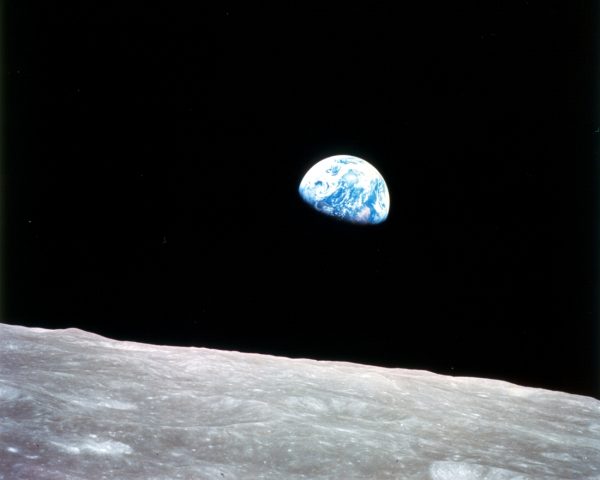
Earth’s Moon
Many scientists theorize that long ago, (by that I mean several million years ago) a Mars-sized rocky body smashed into our young Earth, causing tons of material to eject into space. Eventually, all of that material formed our moon. This is the theory I believe, but there are many more out there for you to look at. Whichever one you choose, the facts about the moon remain the same. One is that the moon is one-quarter the size of our Earth. Also, the dark spots that make up the famous feature, the “Man on the Moon”, are called Maria (mah-ree-uh). They are cooled lava planes from when the moon first formed.
Mars’ Moons
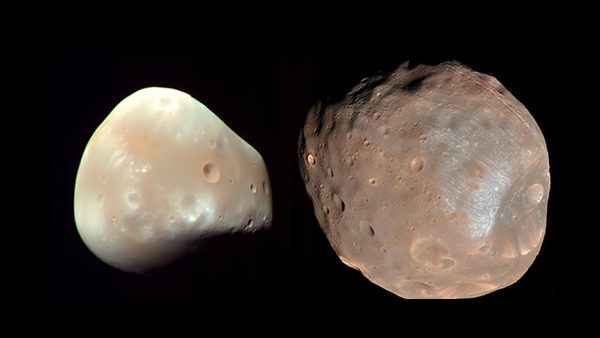
Mars is the only planet in the inner solar system that has two moons! Mars’ moons, Phobos and Deimos (fo-bos and dea-mos), are two of the solar system’s tiniest moons (the rest belong to Jupiter and Saturn). Phobos, the larger of the two, orbits only 3,700 miles above the surface, and that is the closest to its parent planet that scientists have found! Scientists think that in around 50 million years, Phobos will either crash into Mars, or break apart and become a thin ring. By the way, 50 million years is very short for Astronomical Time. Unfortunately, there’s not much to say about Deimos. Poor guy!
Both planet’s moons are tidally locked, meaning that the same side faces the planet all the time.
Dedicated to Jim Lovell, who died on August 7th, 2025, at the age of 97.
Source:
To learn more about Jim, click on this link:
Acting NASA Administrator Reflects on Legacy of Astronaut Jim Lovell.
Anni Alvarez • Jan 13, 2026 at 9:25 am
Wow!
Ellyn H. • Jan 6, 2026 at 11:50 am
I love how knowledgeable you are about this crazy cool topic!!