














Hi, I’m Kathryn, and I’ll be giving you facts about our solar system and space as a whole. I thought that for my first article, I would start with something close to home. And by that I mean the very planet you live on, Earth!
Conditions for Life
The Earth is the only planet with known life, and a lot of it. Roughly 71% of Earth is covered in water. Unfortunately, less than three percent is drinkable, and a little more than two-thirds of that is locked in the icecaps and glaciers. All life needs water, so we’re very lucky to have even that small amount. Earth’s axis tilt is 23.5 degrees, which helps the Earth create seasons, which are essential for the life cycle. Also, Earth’s atmosphere has just enough pressure for life to be sustained. Too thin, and it would all float away, like what happened on Mars. If the atmosphere is too thick, however, everything would get crushed, like on Venus.
Which leads me to… (I’ll talk about Venus and Mars in my upcoming articles)
Comparison to Other Planets
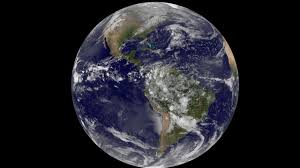
Other than being the only planet with life, Earth has many more characteristics to compare with the rest of the inner planets. Venus is considered Earth’s sister planet, due to them being similar in size and formed in the same part of the Solar System. Venus also has a very thick atmosphere. Mars is half the size of Earth, but lost the majority of its atmosphere. Earth’s atmosphere is right in the middle, which is perfect for life to thrive.
Here’s links to my sources:
Ocean Worlds: Water in the Solar System and Beyond – NASA Science The part of it I used for this is after the comet 67P picture.
Why is Venus Called Earth’s Evil Twin? We Asked a NASA Scientist: Episode 32
Another thing you could watch is the Theia arc on the Solarballs channel on YouTube. While mostly fictional, it does throw in some facts here and there. If you’ve never heard of them, I recommend asking a parent to watch it first to see if they think it’s safe.