

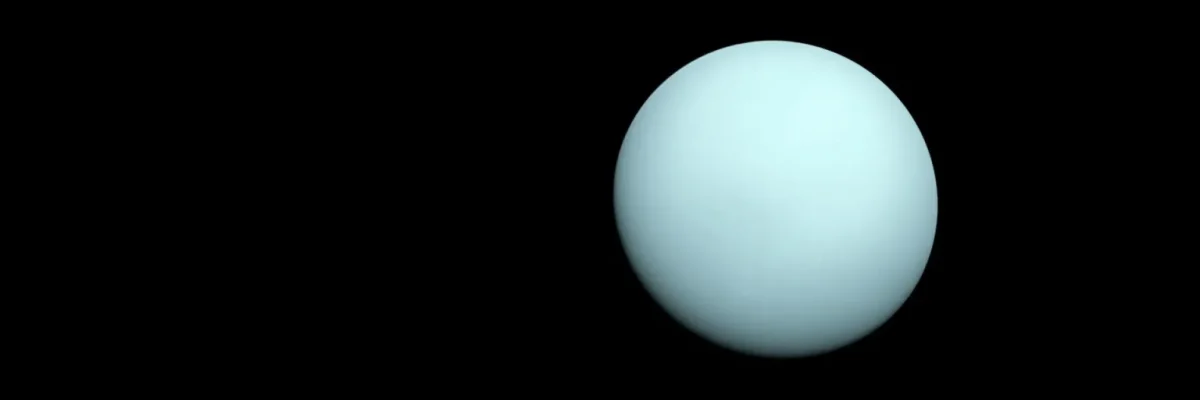










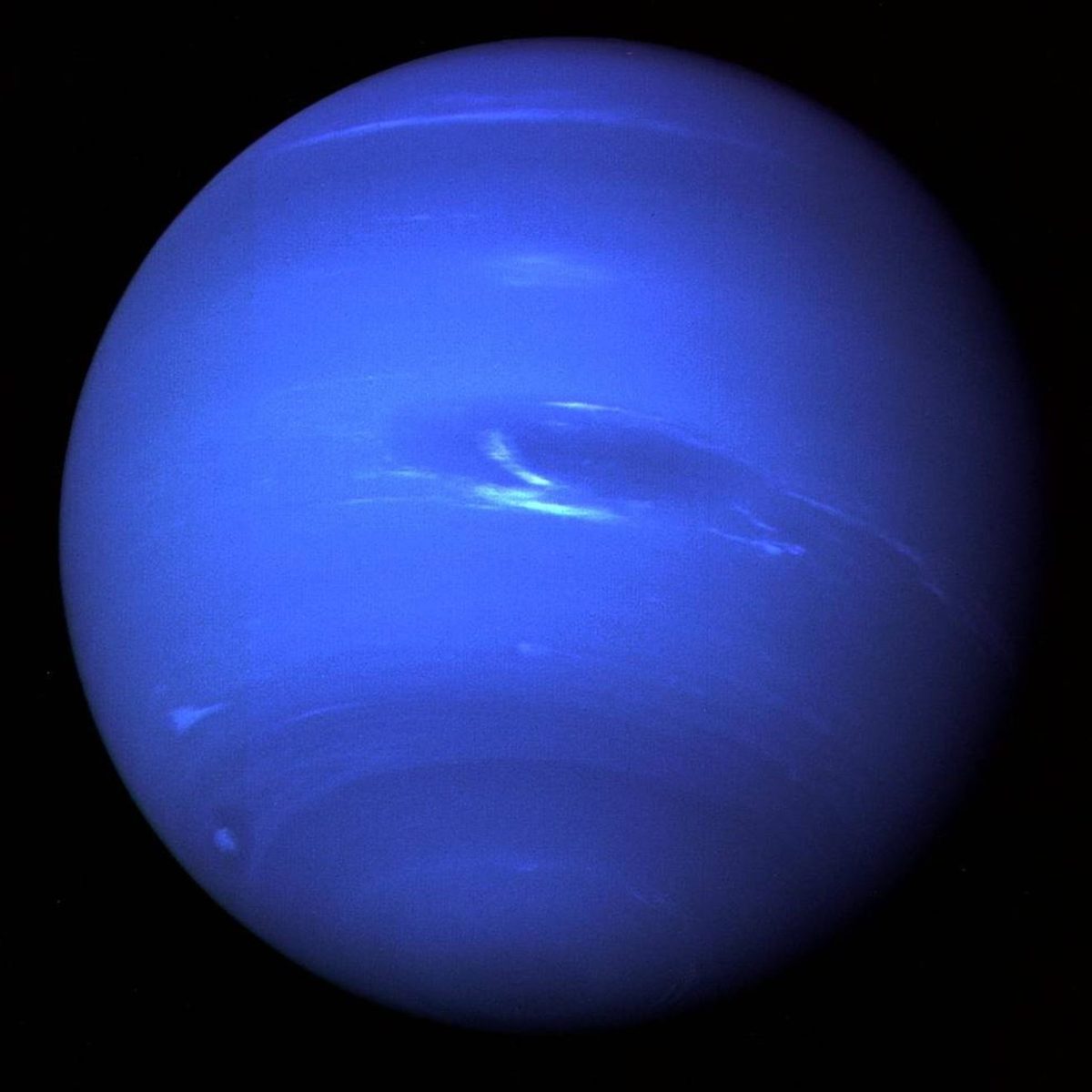
Welcome back! Sorry about the delay. It’s time for… NEPTUNE!
Size and Distance
Neptune’s equatorial diameter is about 30,775 miles around, making it the smallest gas giant. It is also the other ice giant, joining Uranus.
Its average distance from the Sun is an average of 2.8 billion miles, or about 30 AU (Astronomical Units). It also takes sunlight four hours to reach the surface of Neptune. From Rolla, that would be like driving to Kansas City (roughly).
Orbit and Rotation
Neptune’s year is 165 years long! So if it started a new year today, it would complete its year in 2191. And on Earth you’re lucky to live over 90 years old! Occasionally, Neptune and Pluto (dwarf planet) sometimes switch places. Pluto’s strange orbit makes it so that Pluto is occasionally inside of Neptune’s orbit. But don’t worry, they’ll never crash. That’s one more astronomical catastrophe we don’t have to worry about!
Rings/Formation
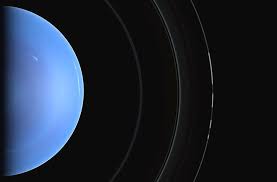
Neptune has several rings, but parts of it are clumped together, forming something that NASA calls arcs. The main rings (starting from the planet and moving out) are named Galle, Le Verrier, Lassell, Arago, and Adams. They are named after famous astronomers who made significant contributions to the discovering and understanding of Neptune.
Like the rest of the planets (except Jupiter), Neptune was formed 4.5 billion years ago. It is suspected that Neptune formed closer to the sun, and then moved outward to where it is now.
Structure/Surface
Neptune is formed of the same gasses Uranus is, which is what gives them their “Ice Giant” status. But surprisingly, Neptune is the densest of the Gas Giants. If I knew why, I would tell you.
Because Neptune is a Gas/Ice Giant, it has no physical surface to land on. So yet again, DON’T GO SKYDIVING. ON ANY OF THE GAS GIANTS. E V E R. It looks solid because of the clouds, but it’s not (sort of like how our clouds look like cotton candy).
To end on a less dark note, this is the last of the Solar System planets. My next articles are going to be coming soon, hopefully!
Link to source here.