













Welcome back! We’ve completed the Inner Solar System, so we’re moving on to the Gas Giants. (By the way, this is going to be a much longer article. There’s just so much to talk about!)
Size/Namesake
Jupiter is called the King of the Planets for a reason. As the largest planet, it could easily fit 1,000 Earths inside. And Earth seems big to us humans! “Jupiter is 11 times wider than Earth. If Earth were the size of a grape, Jupiter would be a basketball!” (Nasa: Jupiter Facts) Jupiter got its name from the Greek King of the Gods. (Quite fitting for the largest planet.)
Formation/Composition/Rotation
Jupiter is the oldest planet, and from what I remember from a Nova episode, it was formed before the sun ignited. But I could be wrong. 🙂
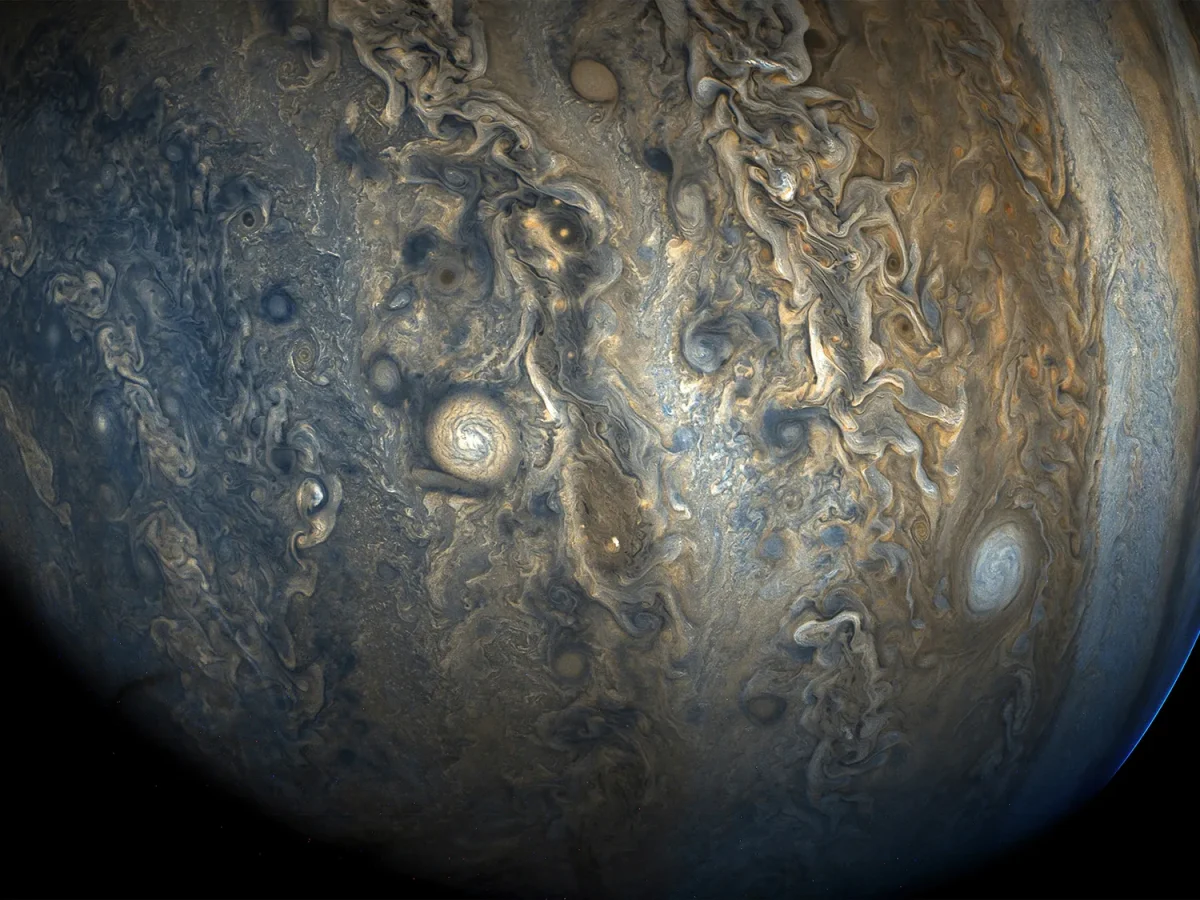
Jupiter is made of hydrogen and helium, much like the sun. But since Jupiter is a gas giant, there is no ground. I refer to it as composition, but it’s really just a very big atmosphere. The vivid bands you see in your telescope (or pictures if you don’t have a telescope.) are made of gasses such as sulphur and phosphorus that float up from the hot, pressurised depths. Jupiter’s storms can last more than an entire Earthling’s life because there’s no ground to slow them down. The Great Red Spot has been around for more than 300 years!
Jupiter spins very fast. Its day is only 10 hours! Its year is also the shortest of all the gas giants, at 12 earth years (4,333 days).
Magnetosphere
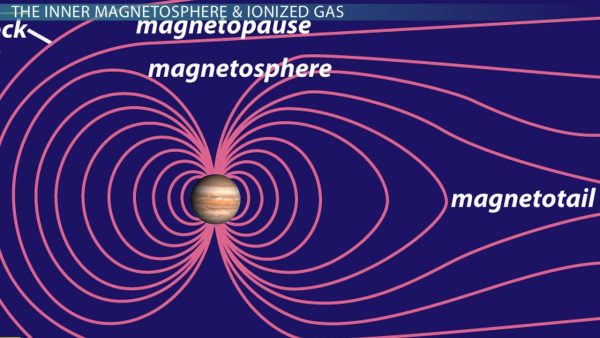
Almost every planet has one of these. With Jupiter as the largest planet, it’s fitting that it also has the largest magnetosphere. It stretches up to two million miles past Jupiter itself! And because of the solar wind, (don’t worry, I’m going to do an article on stars) it becomes a tadpole-like shape behind the planet. The sound it makes is HAUNTING. Use the “Jupiter Sounds” link below to hear it. But on happier terms, the magnetosphere does produce some of the prettiest auroras.
Also, Jupiter apparently went on a collision course with the Sun during what the Nova episode lovingly called Jupiter’s “teenage years”. But that was obviously fixed, wasn’t it? 🙂
Sources: Jupiter Facts