




We decided we wanted to write about AI crochet patterns because of the impact they have had in not just ours, but other people’s lives. Not long ago, Anni found a crochet pattern that seemed as if it would be fun and simple to make. Though she quickly realized that it wasn’t making a whole lot of sense, and wouldn’t turn out at all like what the picture described. This is more or less what we found when we asked Chat GPT to generate us a crochet pattern for what we considered easy and hard categories. Throughout this article, we will share the process, results, and more!
Process
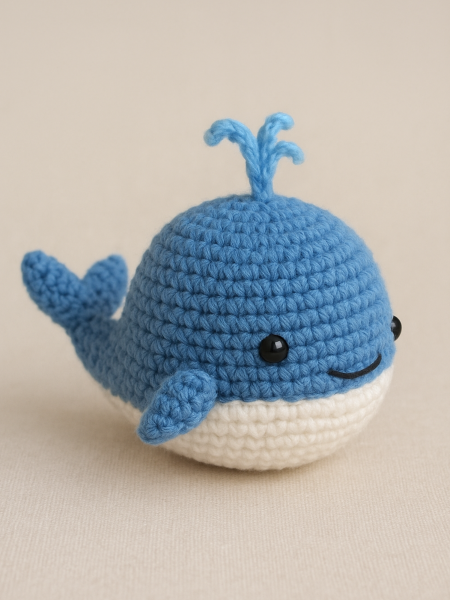
We gave Chat GPT the prompt to “Generate me a crochet pattern for a (insert amigurumi name).” After receiving the pattern we asked for it to “Generate me a picture of what the finished (Insert amigurumi name) will look like.” We asked the AI all in separate chats for separate animals (pattern and picture in the same chat) as someone would do to acquire a regular pattern. When picking our desired animals, we decided to sort them into two main categories; easy and hard. We decided to do these two categories to see how Chat GPT would create more advanced patterns versus easier ones. For our easy category we chose to do a whale and a snowman, and for our hard a cow and reindeer.
To start with the making of our amigurumi, we used the brand named I Love This Yarn with some exceptions if a specific color was not available. This yarn is a worsted weight acrylic, as described to use by the pattern. We also used three point 5mm hooks for our projects, safety eyes, stuffing, and basic notions. For the “optional” section of the pattern we decided to include all of the extra accessories. While following the pattern we decided to go off of the instructions if it was incorrect instead of stitch count if the given count happened to be wrong.
Results
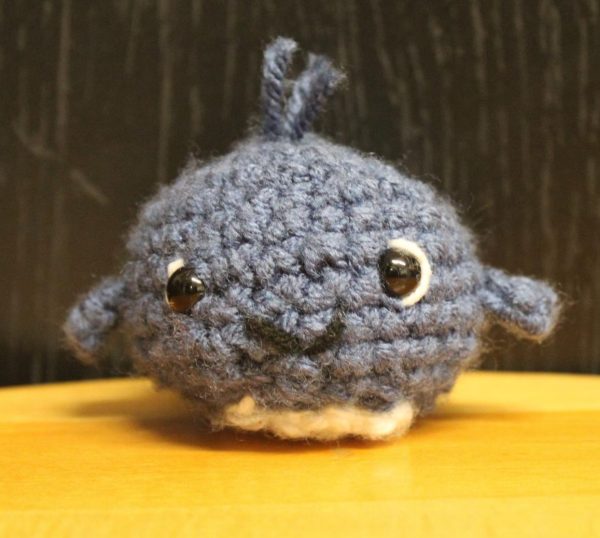
During the process, and after seeing the finished product, it wasn’t hard to tell that there were few resemblances and many differences. For example, in the whale pattern, it was obvious to the creator that the design of the tail in the picture wouldn’t turn out to be the same according to the pattern. In the generated pattern, it described the tail as being two flat tail fins sewn together to form a heart looking shape. But in the given picture, it showed a three dimensional tail with intricate tail fins connected to the main body. The “optional” spout at the top was shown as braided strands that were naturally curving to look like flowing water, although the instructions only stated to tie a few strands of yarn onto the top, giving it a stiff look. The rest of the body was pretty straight forward, but one big difference was the white patch for the belly. This was because it was a simple square on the bottom compared to a curved section crocheted in.
Luckily, the snowman had more similarities than differences. The head, body, arms, and scarf were all simple shapes that turned out to look like the picture. The only thing that was significantly different from the picture was the hat, which was also an unnatural shape to crochet. Finally, the snowman seemed to stay true to the concept of an easy pattern unlike the whale.
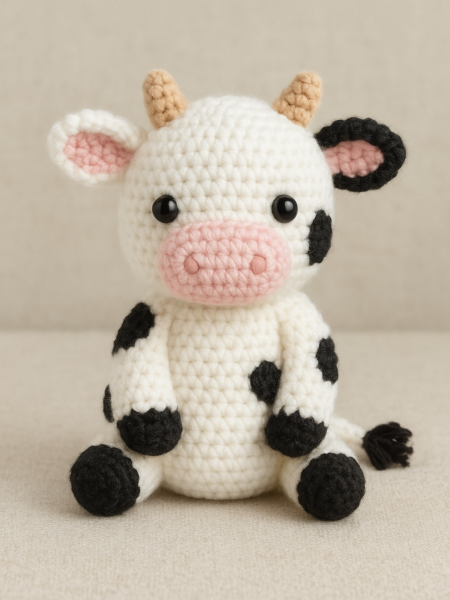
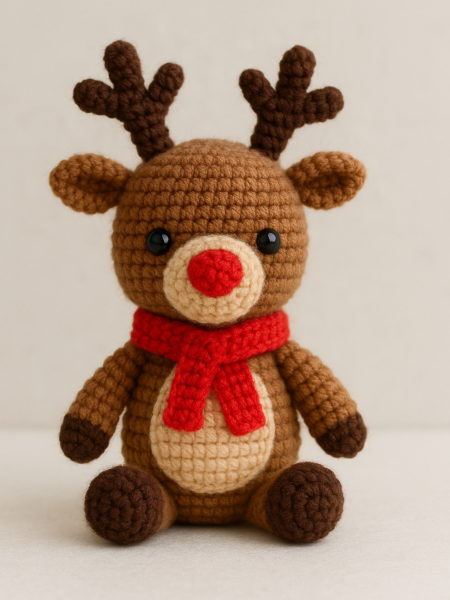
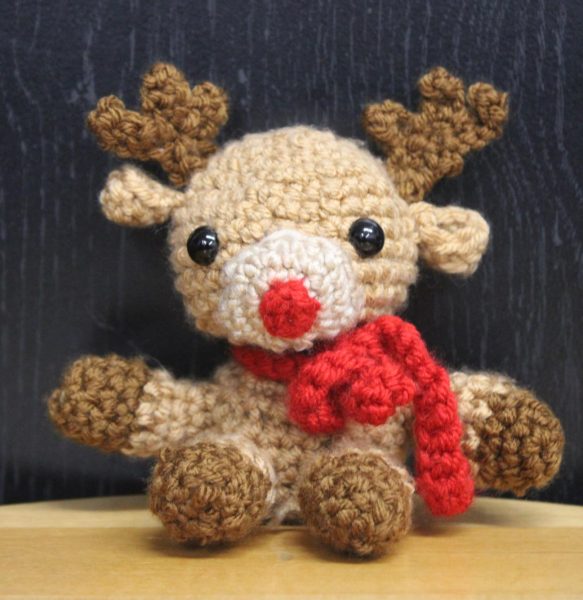
For the cow which was a harder pattern there were almost no similarities. Instead of a sitting style cow, like shown in the picture, it was standing with chunky legs and considerably different styles and shapes of the head, snout, horns, and ears. Another major difference found were the spots, which were large spherical pieces sewn in instead of crocheted into the body causing them to stick out from the body. Then, for the reindeer pattern it was missing instructions for a belly patch and three dimensional antlers. In the picture the antlers were elaborate and stuffed antlers, while in the pattern it described a flat piece with three rounded spikes. Finally, the head and body were unproportional compared to the picture.
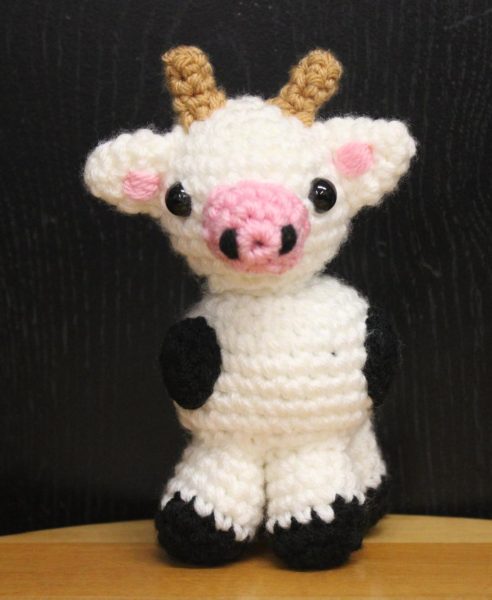
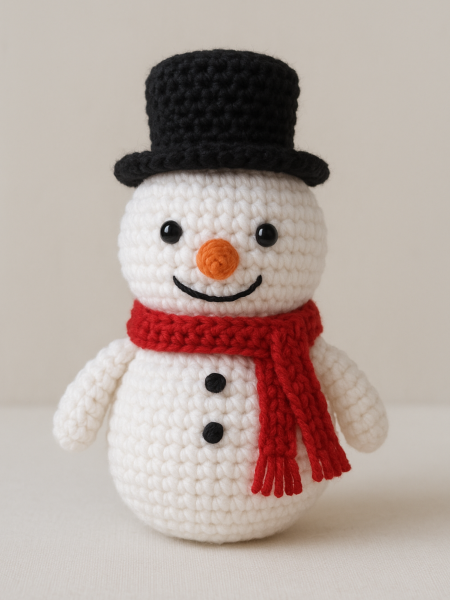
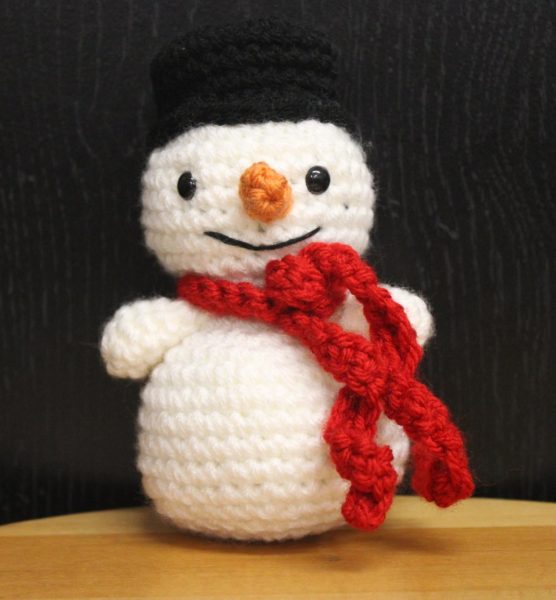
One thing Greta noticed about a lot of the parts in these patterns are that they are very simple shapes sewn together. This also happened to be the parts that were left out of the generated picture. For instance, the whale pattern left out the part in the picture that had the tail, which turned out to be extremely intricate. This also includes the hat on the snowman, antlers on the reindeer, and features on the cow. All of these details are unnatural shapes that take more skill and knowledge of the hobby to recognize how to make. This goes to show that what you get in an AI generated pattern that can easily be created by you with just a little bit of practice. In Greta’s personal experience, if you can read and follow a crochet pattern, you can learn to write one. When creating a pattern, a lot of the shapes that are needed for the base are simply spheres and cylinders. These are some of the more simple or basic skills learned when you first start crocheting.
Real or AI?
How do I avoid AI crochet patterns? Well, luckily there are some differences that may help you differentiate between AI and real. To start, look at the stitches in the pattern. Do they look like a blob or a typical X or V? Be careful, that may be AI. Also, look closely at the picture. Do you notice how some of the details are blurred? Look at the cow for example, do you see the strange stitches on the ear and the nose, also notice how blurry the tail is. That’s an example of AI! Another indicator that the pattern is fake is that the proportions are off. We don’t have any examples of that in the photos we generated but there are some examples online. Another indicator is small differences in the listing photos, again we don’t have an example of this, but we encourage you to try and find some of these indicators in patterns for sale! Some things could be a different shaped horn, or a spot where there wasn’t one in the last picture, a color change in a different spot (etc). Another thing that may be a giveaway that AI created the pattern might be that it’s a little too perfect. In a real pattern there are probably one or two imperfections like the head is slightly crooked or one arm is a bit higher than the other. Just be sure to be careful, some creators are very skilled! It could look seamless and still be made by a human. The last visual sign of AI is the background being flawless, look at the cows background one color and very smooth. Remember that it is possible to get a pretty background but it may not be as common as you think!
So now that we have covered the visual signs, let’s look at the giveaways in the pattern description. The first thing you want to look for is an obnoxious amount of emojis. Look at the patterns above, see how they always have an emoji after everything for example,🐽 Snout, 🐾 Ears (Make 2), 🧣 Optional Accessories. These symbols appear everywhere, so don’t be fooled by one or two emojis. A creator may want to add some emojis, but if there is an abundant amount it’s most likely AI. More indicators include a listing with a big sale something like “200+ Pattern bundle!” these are often generated. Before you buy a pattern, also look at the shop, read the bio, and read the reviews. If some sentences don’t make sense, start looking for other indicators, another sign would be grouping a skill level together, like beginner-intermediate without any examples for what that can be. While researching this article we decided that we should try and find some of these AI patterns ourselves. We started to search and the results were very surprising. While scrolling through the patterns on etsy we saw fake commenters! So before you buy any pattern, be cautious, and if you happen to run into an AI pattern, make sure you leave a review to warn other creators about this pattern!
AI Alternatives
Some options for safer patterns are verified creators. You can find these people on etsy and other websites. Often, a crochet book can be trusted for good, safe patterns, as well as youtube videos that show the process of making the crochet piece. Always do your research though before buying and making a bought pattern. If you do come across an AI pattern be sure to let other creators know and report the creator!
Pros and Cons
Before you completely start judging the use of AI, let’s start talking about how it can and can help us! First off, it’s very easy to use if you need, and if you can’t find a pattern it could be a quick fix saving time and sometimes money! In addition, AI can give you great inspiration. It doesn’t have to be just for making patterns, it can also give you some ideas for a new project! AI can supply a more exact measurement of materials, reducing waste, and save money!
On the contrary, AI can take away the point of having human creators that take to time write and share their own patterns and ideas. Many people who write patterns support the crochet community and devote their skills to help their fellow crocheters develop their own skills. Also, many AI generated patterns are inaccurate and contain many mistakes. This could discourage other crocheters because the patterns usually don’t turn out like the pictures.
Another thing to think about is how AI might evolve in a couple years from now. If it can grasp the idea of no sew parts, practical features, and more detailed instructions on the features, AI could be a good source of finding a free pattern, though, once again, this could take away the point of having people write patterns and would deem a lot of the existing creators as unneeded. AI can also be more efficient, and can provide a free outlet for your creative ideas. In other words, for those who can’t get their ideas down as a physical product or pattern themselves, asking AI to generate a pattern or even give them a rough picture could help them finalize their idea and present it to others. While considering the use of AI, please take into account both the pros and cons!
Our Takeaways
In this article, we talked about the results of our generated patterns, what to do and how to find AI crochet scams, and the pros and cons of AI. Remember to do your research before you purchase or use a pattern and share your results. AI could get more reliable over time and may be able to produce better patterns for the benefit of crocheters. Though, for now, we don’t know for sure if AI can ever be completely reliable for crochet patterns, so keep an eye out for scams, and support small businesses for their amazing work!
Sources:
Ellyn H. • Jan 28, 2026 at 11:28 am
Good job anni and greta! 🙂